The Writing Contest Scam

Two or three people, with healthy bodies and the right sort of receiving brains, could turn the whole tide of human thought, could direct lightning flashes of electric power to slash across and destroy the world of dead, murky thought. Two or three people gathered together in the name of truth, beauty, over-mind consciousness could bring the whole force of this power back into the world.

–H.D., Notes on Thought and Vision

There’s been a fascinating discussion going on the last few days over the Buffalo poetics listserv. It began when Noah Eli Gordon posted a notice about the 2010 Subito Press Book Competition. Richard Owens, mentioned in my last post, responded to this notice by writing:

for years now i’ve watched poets (many of whom identify themselves with radical politics, “progressive” thinking, non-normative practices) do nothing more than reproduce the logic of market systems and commodity culture by participating in (or, worse, organizing) poetry competitions engineered expressly for the purpose of roping in cash and fostering a competitive rather than cooperative cultural environment (&, yes, competition and cooperation are in _no_ uncertain way mutually exclusive).

but fair competition is a good thing, right? like, if only we could weed out a few greedy apples then market-based economies (cultural and otherwise) would be beneficial to all, no? and who doesn’t want to win?

Rexroth was spot on when he wrote: “If offered a crown | refuse.” Charles Ives was spot on when he sd: “Awards are badges of mediocrity.” [The post goes on, but this is the relevant portion for my purposes.]

What followed from this was enthusiastic agreement from a number of listservers, including John Latta, Pierre Joris, Gloria Frym, and others. Gordon then responded by noting that a) he is not affiliated with the Subito contest; b) he does run his own press, Letter Machine Editions, which has seen him go over $5K in debt; he then recalled c) a long list of contemporary poets who presumably have street cred with the folks on the listserv (Nathaniel Mackey, Elizabeth Robinson, etc.) who have won book contests; and he closed by writing:

Maybe these people would shun contest now, but that’s because they’ve had the opportunity to establish themselves in some (& not always so) small way through having won one. This is why I think Pierre Joris’s comment about them being scam affairs comes from a place of privilege. Although I respect all of the many years he’s put into poetry, teaching, translation, etc., it’s just not that easy, as Amish Trivedi notes, for a young poet to break into the scene. Yes, I’m an advocate for starting your own press and journal, both of which I did. But for folks not lucky enough to live in a city with a large, active poetry community, or to study at a school like the University of Buffalo (as Richard did), with its instant community and funding for student-editing projects, it can be a daunting thing. Yes, creating alterative market systems is one answer. I think we all think Sub Press is pretty amazing. But the problem is much deeper than the tiny market systems of poetry. One can’t up & move to NYC to be a poet these days without being somehow independently wealthy. That wasn’t always the case, tho.

As hinted in Gordon’s response, several younger poets had chimed in along the way to wonder what beginning authors are supposed to do to “break into the scene.” C.J. Martin, one of the publishers of Dos Press and Little Red Leaves, suggested that Owens was being a bit too harsh — “Walk it back, man. No Salt? No Kelsey St. (I think they had a fee recently, though this might be wrong)? No Ahsahta? No Omnidawn? No Nightboat? This is a major erasure.” Tyrone Williams then added, “Like others I have found this conversation rather interesting but like a few here, Chris especially, I’d like YOU to offer what you might see as a politically responsible publishing model. To be blunt–what is the source of funding for damn the caesars? I know lots of people who use their own funds and state grants to support their presses but those models–siphoning capital–presuppose participation in a labor market and government subsidy model that has its own, shall we say, political problems..”

OK. That’s a lot of back-and-forth, and I’ve boiled down the long discussion thread considerably. What seems to be at work here, following from Owens’ initial objections, is the following layered response:

1) Contests are not ideal, but young poets need some entry point into the scene, a way to make a name for themselves, etc. (Noah Eli Gordon, others such as Amish Trivedi);

2) It’s disingenuous for some to be against contests, when a number of known and respected poets have used them as a springboard, in part, to get where they are now (Gordon);

3) In any event there are respected, legitimate presses that use contests as a way to promote themselves and raise money to put out important work by contemporary poets (C.J. Martin);

4) It’s disingenuous to criticize fundraising by contest when your press is receiving top-down, institutional funding that has its own problematic associations (Gordon, and much more explicitly, Williams).

With respect to the first point, I must admit I have no objection to the abstract idea of contests. I’m a competitive guy. I like the idea of winning. When I was in high school, my creative writing teacher, Mr. Chute, encouraged me to enter many local and school-sponsored contests. I did pretty well — won a fancy dictionary, which I still used up to a couple years ago, won some money, won some neat-looking certificates. The encouragement I took from that is probably what propelled me to continue working and studying poetry and writing during the bleak years to come.

The problem comes in when, as Owens points out, the contest becomes tied to a bottom-up way of funding the venture itself. To me, this is no different than a pyramid scheme. You collect money from a vast number of entrants, 90% of whom have no shot to win the contest. They are absolutely funding the prize kitty, publication of the book, and possibly more publications besides. Assuming the contest draws upwards of 100 entries, that means an intern –probably an already overworked and underpaid graduate student — is responsible for being the first set of eyes on 600-800 pp of manuscripts. Which in turn means quickly scanning the first five, maybe 10 pages of your manuscript before putting it on the “reject” pile. Is that worth your $20?

What about point no. 2? Yes, a fair number of poets have won contests and are now ‘established.’ But looking, for example, at Ahsahta Press, I notice that my old friend James Meetze has won the 2010 Sawtooth Prize for his manuscript Dayglo. Meetze already has a full-length collection and several chapbooks out. He teaches in the University of California system. He also founded Tougher Disguises press, which in its time published books by Peter Gizzi and Clark Coolidge, among others. Needless to say, Meetze is not a new poet coming out of nowhere. I would venture to add that most of the contest-winning poets Gordon mentions were roughly in the same boat at the moment they won: relatively young poets who nevertheless already had a strong publication record. That’s why I say that 90% of the neophytes wading into these contests have no chance. They simply don’t yet have the chops.

No. 3: I agree with C.J.’s assertion
that there are very good presses that engage in the contest gig. They should not be rejected out of hand. Some of the books published by this means are worthy, even important, and the authors as well as the readers who discover them are no doubt grateful. However, this just shows how insidious the culture of the pyramid scheme can be. We accept it without pause when it comes to the model of capitalism. It doesn’t much surprise us when entire towns are destroyed by Goldman Sachs via financial schemes set up to fail, and the outrage is not such that we’re willing to actually change anything substantial in the way the market works.

Just for the record: I understand that there’s a big difference between a corporation callously scamming billions of dollars and a small press trying to fund itself through a writing contest. I get that. And I know Janet Holmes at Ahsahta — I know that she genuinely enjoys running the contest, but I also know that overworked grad students do help with the screening. The point is, once you accept that the principle is the same, i.e., that a large number of folks with no real shot at the prize are paying for the benefit of the very few, then you can’t make exceptions based on the perceived legitimacy of the contest and press as a whole. Either the whole thing is corrupt, or none of it is.

How then do you fund a small press? This leads to point no. 4.
I find it lamentable, not to say laughable, that Noah Eli Gordon has run up $5K+ in debt running his. It’s true that there is some institutional funding available for those, like Owens and myself, affiliated with large universities which, against all odds, continue to show an interest in supporting such ventures. This bit of support will undoubtedly dwindle in years to come, as endowments and budgets in the humanities shrivel and disappear. However, my press has been up and running since about 2000. Owens began DTC before coming to UB. Neither of us got seriously in hock doing so.

Likewise, successful and relatively high-profile presses like Skanky Possum, Effing, and Interbirth. All of these sprang from the vision and energy of individuals, not funded by any outside sources. The models are disparate: Effing creates relatively inexpensive handcrafted books at somewhat high volume (several hundred per title), Interbirth does relatively expensive, artisan-style books at much smaller volume (50-100 per title); both attempt to break even by selling enough to offset production costs. And both, to my knowledge, thanks to the tireless efforts of Scott Pierce and Micah Robbins, respectively, have succeeded in doing so.

As to the sticky question of accepting institutional funding, there is one key difference: it’s top-down. It doesn’t suck the blood of struggling young poets to pay for the publication of slightly less struggling poets. Moreover, in the case of a publication like DTC, not to mention the whole history of student-produced presses going back to the mid-90s journal Apex of the M, the vision of the press is left to the individuals operating it, not subsumed into the institutional apparatus a la the something-or-other University Review. Not to say that those big “review”-type publications don’t also have their place, but there’s a huge difference in terms of the quality and frequency of the work being published.

The bottom line is that I believe poets seeking to break into the “scene,” whatever that means, should spend a minimum 10 years giving to that scene by doing one or several of the following: publishing a small press (chapbook and/or journal series), hosting a reading series, otherwise building community by engaging with a group of like-minded poets who both challenge and encourage you (again, via a reading series, weekly discussion, group study, exchanging and critiquing each other’s work, etc.). Call it an apprenticeship, if you will.

You may find that it’s not for you. You may find that you lose money, lose friends, grow frustrated with the egos involved and the very slim margin for error. In that case, though, perhaps poetry isn’t for you. Perhaps you need to seriously consider your motives for getting involved in the first place. Simply jumping in and expecting or needing to be published is the mindset of the capitalist weevil looking for immediate gain. You are ripe for the contest scam, and the contest scam could not thrive without that mentality.

Hence, the H.D. quote at the very top of this post. The scam would have you believe that you need a cadre of anonymous (or famous) judges to underwrite and legitimize your efforts. This is a lie. All you need are three or four like-minded individuals with a passion for the work, for your individual minds and efforts and energies to play against. Every important movement has been launched this way. Granted, there’s a bit of myth-making involved, but it’s not a terrible stretch to say that the various ‘-isms’ of the early 20th century involved a handful of people in each case — Imagism, Surrealism, Dada, etc. More recently, poetry movements such as the Language School and, yes, Flarf, began with a small group of individuals bouncing ideas and poems around. You don’t need the huge apparatus of a contest.

If you put the time in, withstand the bullshit, and grow to love this “apprentice” work, you will “arrive” on the scene in some fashion. People you respect will know and respect you. And you will be a better poet for it.

The Paris Review de-acceptance incident

Background: I was alerted to this incident via one of my UB colleagues, Victoria Brockmeier, who posted about it on Facebook, linking to a blog run by Daniel Nester. Apparently a number of poets had poems accepted by The Paris Review over the past couple years, slated for publication in 2011 and beyond. (Everyone who has published creative material knows that there is typically a several-year lag between acceptance and publication — generally speaking, the bigger deal the journal is, the longer the wait.) No contracts were signed, but the poems were accepted by the editor and later confirmed by interns and whatnot. Suddenly, with the recent ushering in of a new editor, many of the poets received notice that their poems had been unaccepted.

That’s the story in a nutshell. Nester has really been bothered by this, and seems to have gone on a personal quest to get to the bottom of it, writing to express his bewilderment and even tracking down some of the jilted authors to get their reaction. The sense that’s emerged (I won’t call it a consensus) from his posts and the comments in response to them seems to be that “unaccepting” work is a common practice in the book publishing world, where new editorial staff at an imprint typically means wiping the slate clean and starting from scratch, regardless of what offers have previously been made. However, this sort of mentality creeping into the world of literary journals, according to Nester, is quite unusual and sets a dangerous precedent, and so on — that’s what he seems to be saying; hard to tell exactly what the conclusion is, aside from outrage at the unfairness of it all.

My response: it’s really not that surprising. In fact, in a cynical mood I would even give Paris Review kudos for bothering to tell the authors that their work will not in fact be published. Having sent work out for a number of years, I’ve had the following things happen with surprising regularity: 1) sending work to a journal that explicitly states it’s seeking work and never getting a response one way or the other; 2) sending work to a journal and getting no response, only to find out the work has in fact been accepted (and in some cases, published without my knowledge); 3) sending work to a journal and having it accepted, then waiting years for it to come out, being told that it would come out, and finally finding out through the grapevine that said journal ceased publishing at some point; 4) variations on all of the above.

That’s not to say that I’m bitter. I’m grateful to all the editors who have taken the time to respond to my work, positively or negatively. I simply refuse to play the game anymore. Granted, this is seven parts laziness, three parts conviction. My will to print poems and lick stamps does not equal the patience it takes to be rewarded with publication. There are some journals I actually read and respect, and if I do gather the strength to send work out anonymously again, I will send it to them. But by and large, I’m done. It’s not worth it. As Nester notes, quoting Ezra Pound, poetry is “news that stays news.” Most literary journals don’t have the resources or the respect for the work to honor that notion, which is why they allow precious years to go by before dumping hundreds of poems into massive bricks of text that few will ever read. I prefer to think about the approach of Diane di Prima and Amiri Baraka when they published The Floating Bear, in which vital new work by poets such as John Wieners, Robert Duncan, Ed Dorn, etc., would hit the mailboxes of other interested poets within months of composition. More recently, the singular vision of editors such as Richard Owens, with Damn the Caesars and accompanying chapbooks from his Punch Press, feels vital in a similar way.

For example, Owens is doing a lot of work on British poet Jeremy Prynne. He is the only editor that I know of in the United States to take notice of, and devote himself to publishing, work from the currently exploding innovative poetry scene in and around Cambridge that largely derives from the lineage of Prynne. That scene itself, I gather, is markedly different than the “wait three years for a poem to come out in a glossy perfect-bound university-sponsored mag” approach that’s so entrenched here. Those poets take advantage of lo-fi technology at their disposal to get work out quick and dirty, photocopying, stapling, passing it along, reading and responding to each other with lightning speed. Poetry that’s alive demands urgency, not constipated editorial meetings and endless delays. In light of this, I also found the response to Nester’s query from one of the jilted poets quite refreshing:

This experience will move me even further in the direction I was already headed, toward placing my trust in peers and comrades in the field of innovative writing to create forums for the circulation of exciting work – with new magazines, Web zines, reading series, etc.
Joshua Corey

Frankly, more people should be doing this. The resources are there. All we have to do is tap into a community, find the least expensive options for producing materials, and a venue to hold readings in. And dive in.

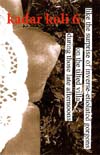
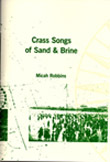
Kadar Koli #5

Featuring visual art, translation, and poetry by: Barbara Maloutas, Brenda Ijima, Jane Joritz-Nakagawa, Roger Snell, Nathaniel Mackey, Clifton Riley, Susan Briante, Teresa K. Miller, Kim Gek Lin Short, Warren Craghead, Ammiel Alcalay, Eileen Myles, Richard Owens, Carrie Kaser, Jessica Smith, Aaron Lowinger, Sarah Peters, Lisa A. Forrest, Michael Kelleher, Maria Mazziotti Gillan, Sean Reynolds. Edited by Micah Robbins and David Hadbawnik. Designed by Clifton Riley.

$10 plus shipping


Diane di Prima feature on Big Bridge

Thanks to Michael Rothenberg, Diane di Prima, and all the contributors who made this feature happen. Here’s a mention of it on Silliman’s blog.

This is from the introduction:

The problem with fame is that one can seldom control what one’s famous for.

In literary history, this has proved true of the writers associated with the “Beat” movement of the 1950s-60s, none of whom, to a greater or lesser extent, has been able to fully emerge from the long shadow of the Beat era, even though most went on to have careers that extended far beyond that brief period, and produced writing that differs greatly from what they wrote during that time.

And this is especially true of Diane di Prima, current Poet Laureate of San Francisco. I first came to her poetry workshop in response to an ad she’d posted in Poetry Flash, the long-running East Bay poetics newspaper, sometime in 1998. I knew her as the striking young dark-haired woman sitting coyly on an unmade bed from the cover of her most famous book, Memoirs of a Beatnik—a text I had hurriedly gobbled up sometime during my undergraduate years, only later coming to realize how vastly underrated it was, a precursor to the explicit and experimental fiction of other women writers like Kathy Acker. Probably by then, while browsing the upstairs poetry room at City Lights, I had also seen the iconic image of Diane sitting astride a piano at the Gaslight, which remains a popular postcard along with other Beat icons in the carousel display at City Lights. I imagine many others know and recognize Diane di Prima the same way: As someone who was, vivaciously and authentically, there. It’s a reductive and limited view, but a mistake that’s easy to make given her strong association with that image, that book—even though, as I mention above, the more salacious episodes of Memoirs tend to obscure the subtle, subversive genius of the text. [...]

Troilus at Big Night (Part I)

Hoa Nguyen’s Visit to Buffalo

Below is an excerpt from Hoa Nguyen’s reading at Buffalo State College on February 26, 2010; go to the Habenicht Press Youtube channel for her full Q&A after the reading. Enjoy!

Video Killed the Poetry Star

There’s a new youtube page for Habenicht Press, on which I’ve posted video of the most recent readings, by Alex Porco and Lisa Forrest. Below is a link to part 1…

Lisa Forrest p. 1

Enjoy!